Context
Following the collapse of Silicon Valley Bank, Innovation Economy clients were rapidly seeking alternative banking partners. The sudden influx of onboarding requests created significant operational pressure, exposing limitations in existing internal workflows.
To support this surge in demand, a new onboarding platform was needed to help bankers efficiently manage client intake and administrative tasks. The challenge was compounded by a two-week delivery timeline, limited research opportunity, and existing requirements.
Goals
- Streamline banker onboarding workflows during a surge in client demand
- Deliver a usable onboarding experience within a two-week timeline
- Reduce operational friction during client intake
- Leverage existing design system patterns to accelerate delivery
My role
- Led end-to-end product design and prototyping
- Synthesized technical documentation and stakeholder requirements into actionable workflows
- Leveraged existing design system components to accelerate delivery
- Collaborated with product and engineering to ship within a two-week deadline
Constraints
Following the sudden influx of onboarding requests, the team needed a solution immediately. Key constraints included:
Rather than following a traditional discovery process, I focused on rapid synthesis, stakeholder collaboration, and leveraging existing design system patterns to deliver quickly while minimizing risk.
Working under pressure
Because research was limited, I relied on technical documentation, stakeholder conversations, and existing onboarding workflows to identify the highest-priority user needs.
I reviewed legacy onboarding processes, analysed operational pain points, and looked for opportunities to reuse proven interaction patterns rather than introducing entirely new experiences.
Tech driven resources
Due to the time crunch, we had very little user insights as no research was done. On top of that, product requirements were unclear as the service objective was still undetermined.
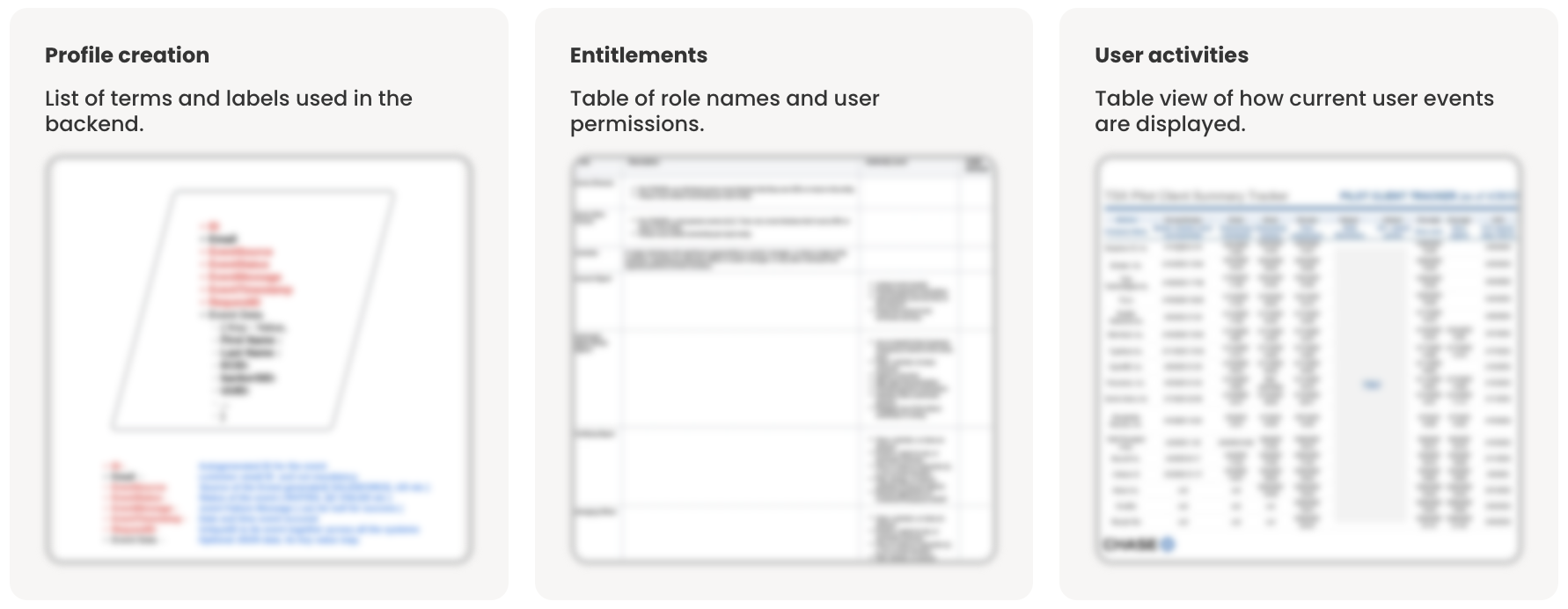
The resources I received for my own context were also very technical and hard to understand — for example, profile creation tables, editorial lists, and user activities documentation.
Accelerating delivery through existing patterns
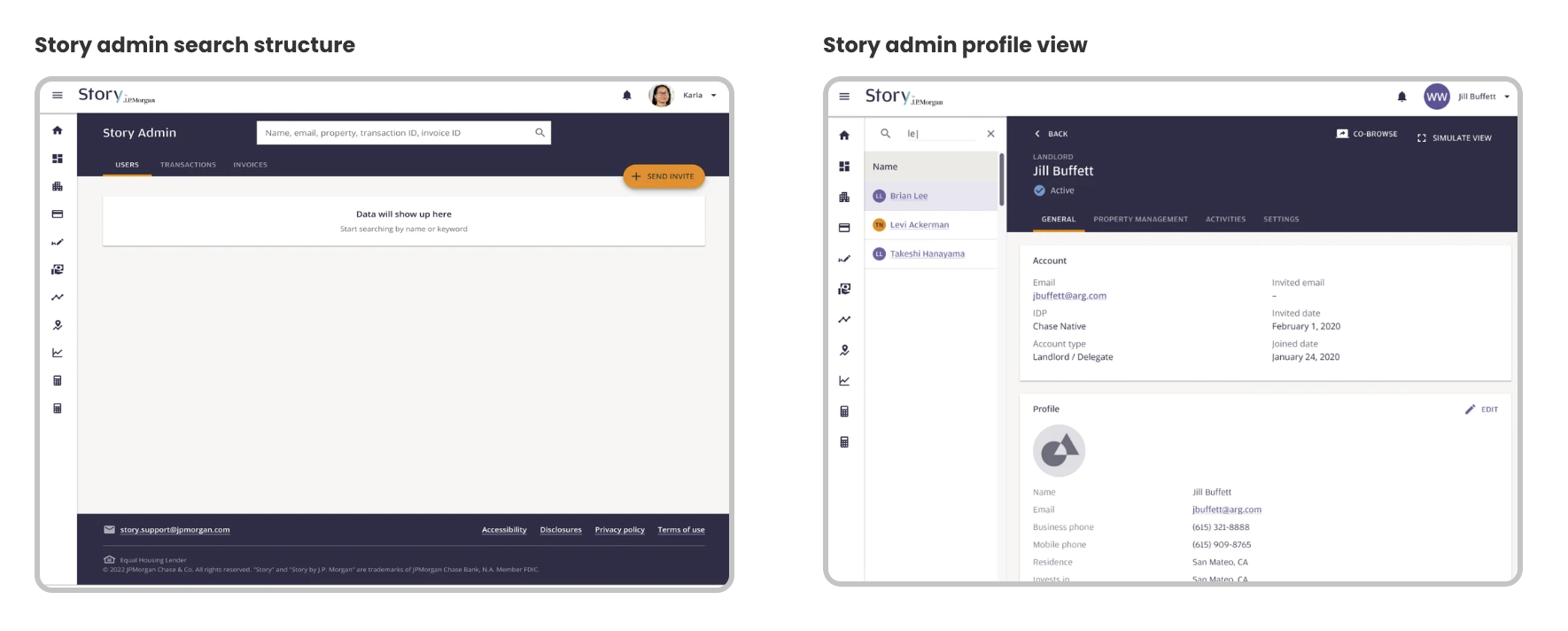
To tackle the ambiguity, I used what I already knew and had. That included existing designs from another admin portal where I was able to reuse the admin search structure here, and take inspiration from the user profile page.
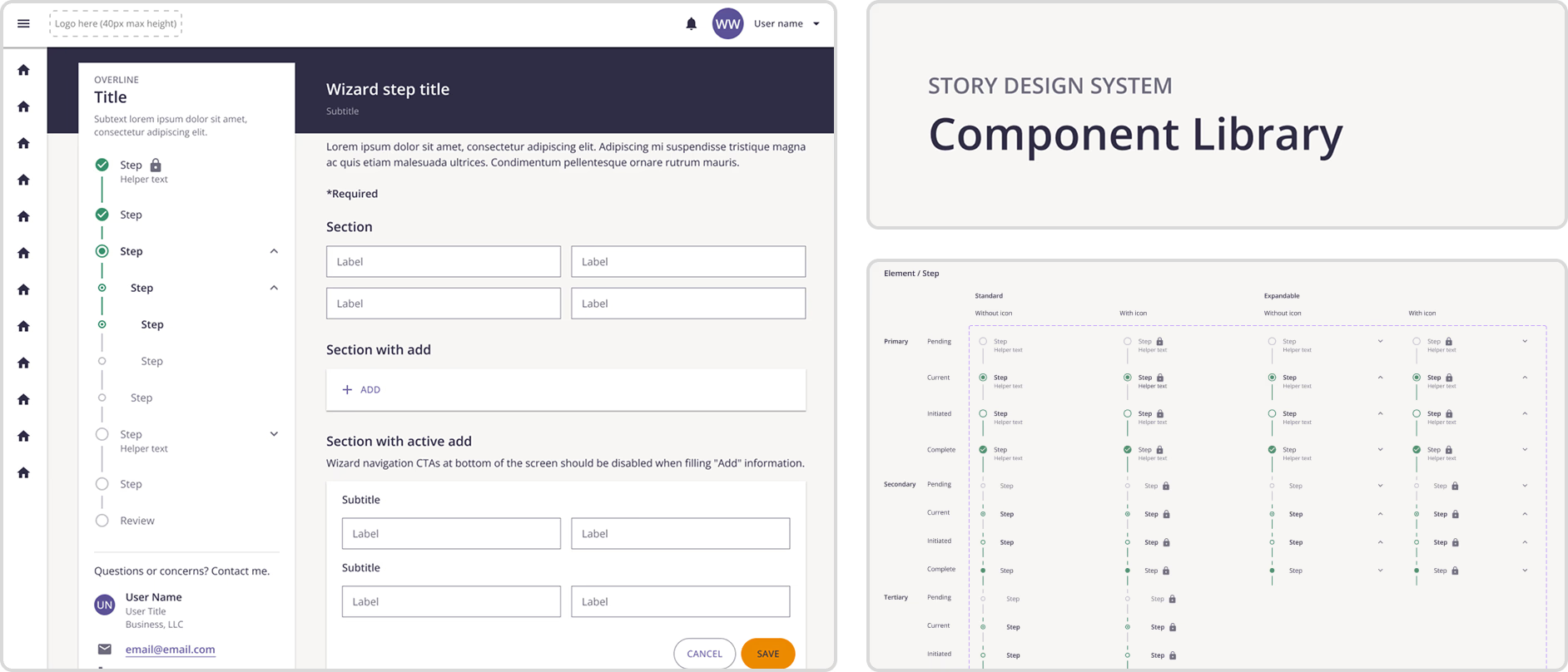
Along with existing design work, I used my familiarity with the Story Design System to my advantage by pulling anything I could use, including floor plans and other patterns.
Key workflow decisions
Final experience
Solution overview
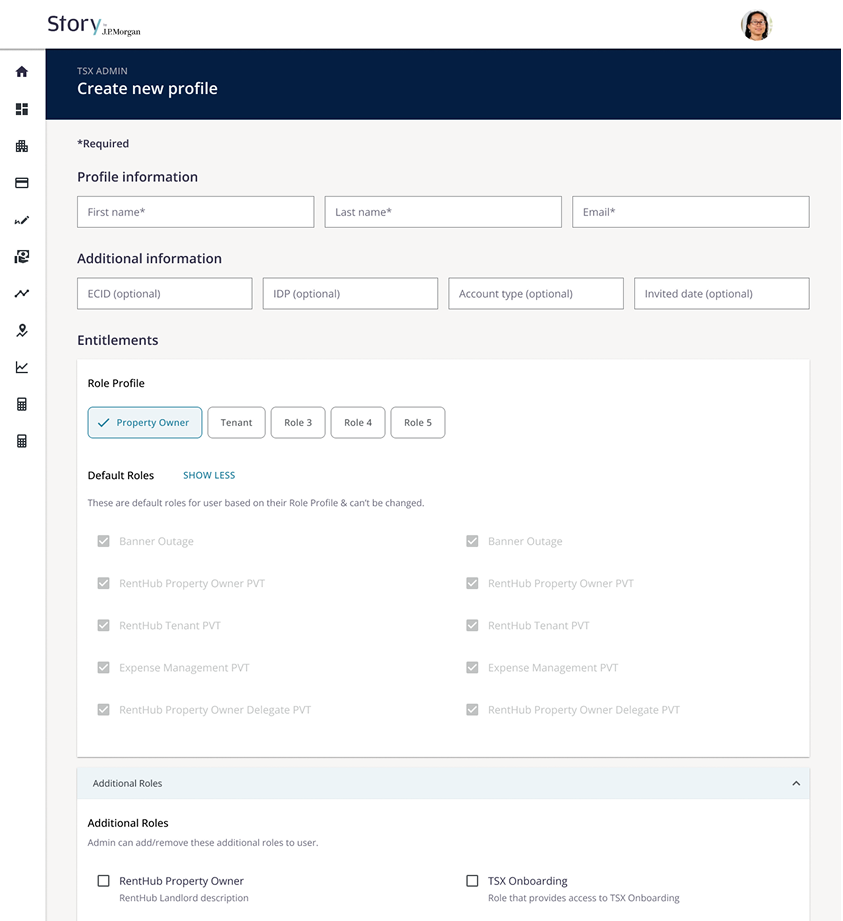
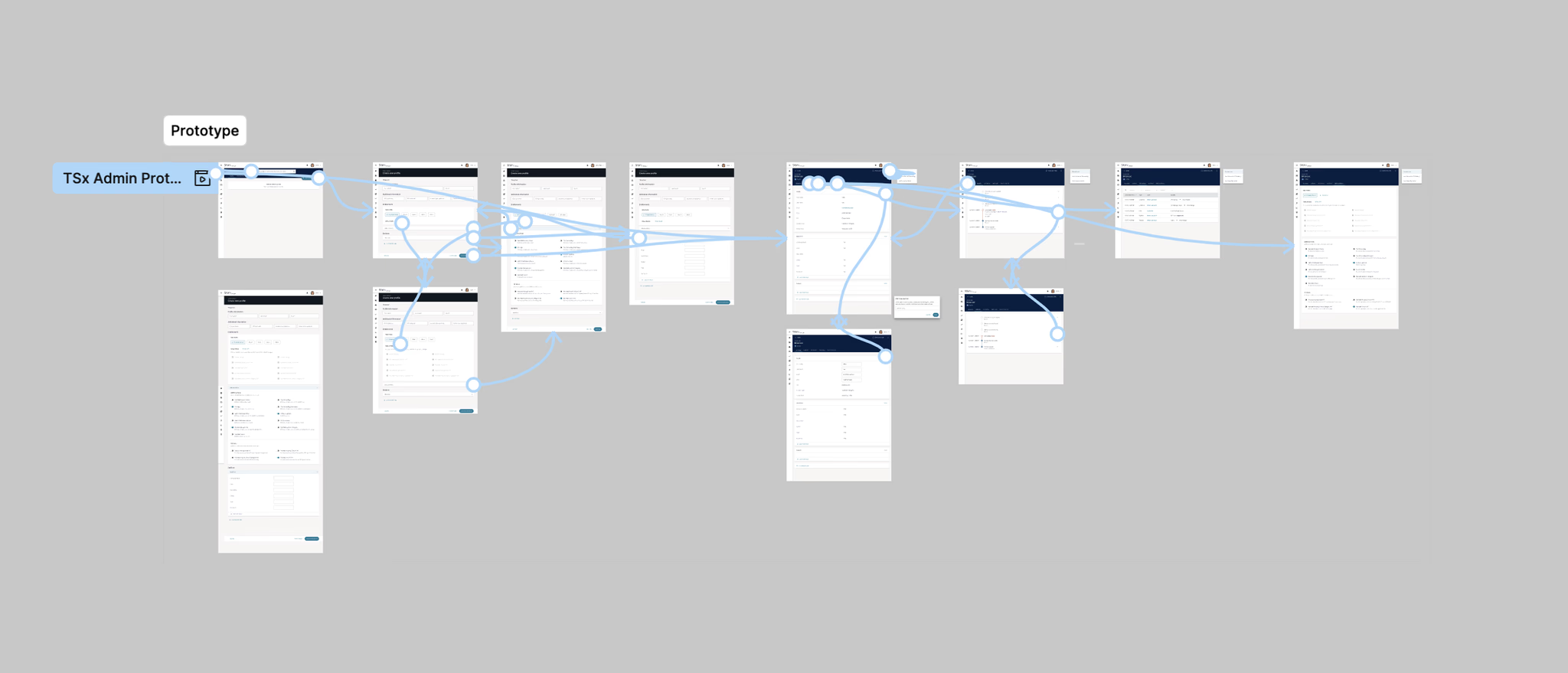
The final solution transformed a fragmented onboarding process into a structured workflow that helped bankers efficiently create, manage, and track onboarding requests during a period of rapid client growth.
Designed under a two-week timeline, the experience prioritized clarity, speed, and familiarity by leveraging existing design system components and established interaction patterns.
A fully interactive prototype is available for discussion during interviews.
Design refinements
Although we did not get to perform any user research or usability testing, I still wanted to validate some design decisions. Using UX resources from platforms like Nielsen Norman Group, I was able to make design changes following UX insights.
One of the more impactful changes included the use of the wizard vs long forms.
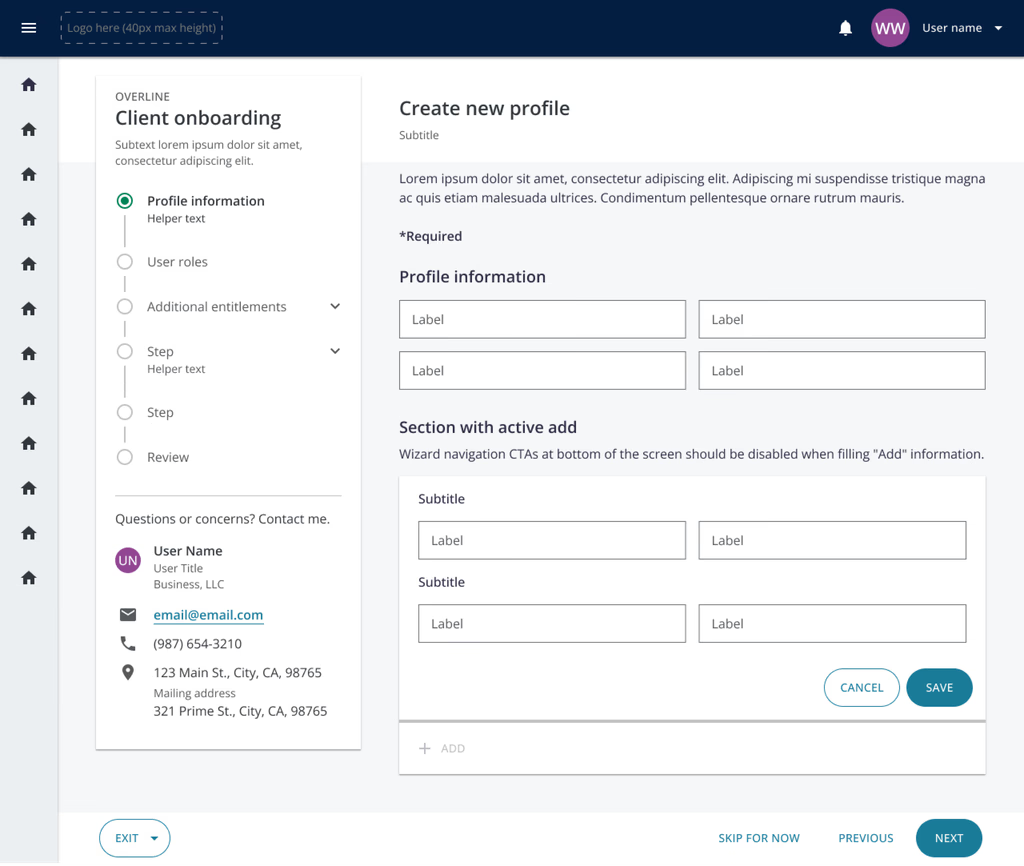
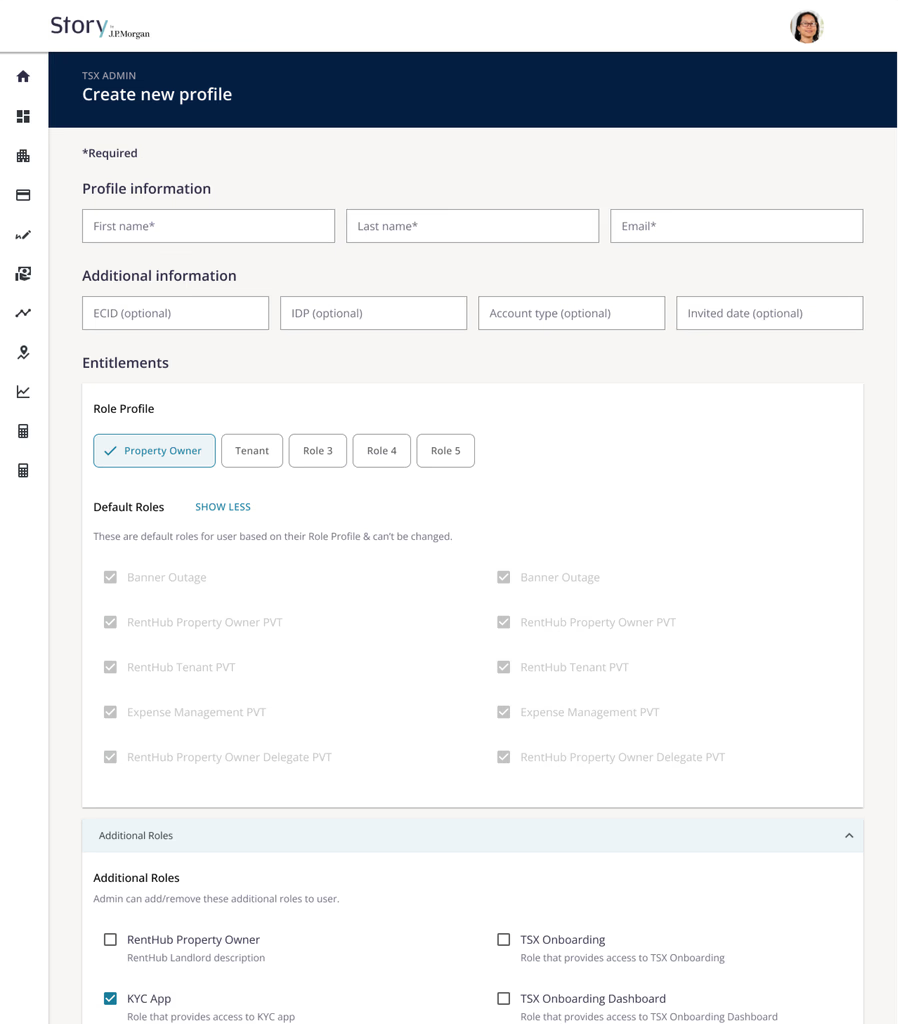
NNGroup research shows internal users prefer long forms for repetitive tasks — reducing time spent navigating between steps and giving flexibility to reference different sections at once.
Outcomes
Impact
The onboarding platform helped Innovation Economy respond to a sudden surge in client demand by streamlining internal onboarding workflows and reducing operational friction for bankers.
By leveraging reusable patterns and a scalable structure, the solution extended beyond its initial use case and became the foundation for three additional administrative services.
Wins
- Delivered a production-ready onboarding platform within a two-week timeline
- Streamlined banker workflows during a period of rapid client growth
- Received positive feedback from bankers using the tool
- Established a reusable framework that was later adopted by three additional administrative services
Reflection
This project allowed me to understand the importance of balancing speed with usability. With only two weeks to deliver, success relied on making thoughtful decisions under constraints. By leveraging existing patterns and focusing on critical use needs, I delivered a solution that supported the business during a period of rapid growth while remaining situationally intuitive for bankers.